
Sign
M267
Looks like: diamond with a small diamond on top
Adapted from the field-cady sign descriptions (Parpola 385). This describes the picture, not the meaning: a sign that looks like a fish may stand for a sound or another word.
Appears in 291 texts (376 uses), mostly on seals at Mohenjo-daro; usually starts a text. In the larger ICIT corpus its Wells equivalent W817 is in 173 texts, including at Dholavira.
Project finding: Validated opener: starts texts Held up
Where it appears 291
Counts are distinct texts in the Mahadevan 1977 concordance (a text repeated on many moulded tablets counts once). 374 objects in all carry it.
| Object | Texts | Share |
|---|---|---|
| Seal | 252 | 87% |
| Sealing | 20 | 7% |
| Tablet | 10 | 3% |
| Copper tablet | 1 | 0% |
| Pottery | 3 | 1% |
| Other | 5 | 2% |
| Site | Texts | Share |
|---|---|---|
| Mohenjo-daro | 191 | 66% |
| Harappa | 60 | 21% |
| Lothal | 14 | 5% |
| Chanhu-daro | 13 | 4% |
| Kalibangan | 10 | 3% |
| Other sites | 3 | 1% |
| Where | Uses | Share |
|---|---|---|
| First sign | 217 | 75% |
| Inside | 56 | 19% |
| Last sign | 15 | 5% |
| Whole text | 1 | 0% |
Position counts use only texts with no damaged passage (289 uses).
In the ICIT corpus (Wells numbering)
W817: 173 distinct texts, 221 uses.
By object: seals 133, tablets 28, pottery 5, sealings 5, other objects 2. Top sites: Mohenjo-daro 89, Harappa 50, Chanhu-daro 9, Dholavira 7, Lothal 5, Kalibangan 4.
W861: 209 distinct texts, 272 uses.
By object: seals 160, tablets 23, sealings 10, pottery 9, other objects 5, copper tablets 2. Top sites: Mohenjo-daro 110, Harappa 48, Lothal 13, Dholavira 11, Kalibangan 8, Chanhu-daro 5.
Variants
Wells (ICIT) equivalent: W817, W861.
Probably the same sign (looks alike and is used alike):
 M286drawing similarity 0.74, context similarity 0.95
Looks alike but used differently (probably a separate sign):
 M261drawing similarity 0.92, context similarity 0.51
 M277drawing similarity 0.97, context similarity 0.31
Pairs from the prior project’s allograph model (image × distribution, signs with at least 8 uses).
Merged with other signs in alternative sign lists (used to test whether findings survive):









Neighbours and fixed pairs 2


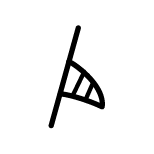

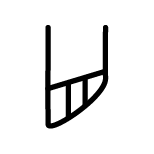

Signs read directly before or after it, counted in distinct texts, never across a line break or damage.
Fixed pairs
At least 5 texts, and one sign takes the other at least half the time.
Fixed sequences in the functional reading
Published readings 3
- Mahadevan · 2010Not tested on its own
akam ‘inside, citadel, inner city’ -> address/opening sign
Yajnadevam’s sound value
- Yajnadevam · 2024Did not hold
r
Yajnadevam 2024 ‘A cryptanalytic decipherment of the Indus script’; per-sign key from yajnadevam/lipi xlits.csv via sources/field-cady_indus_valley_script_corpus/xlits.csv · test record
Part of a 714-value sound key that scores no better than keys fitted to noise (atlas 1.1).
From proposals.json and CATALOGUE.csv. A claim is listed under every sign it names.
Project tests 27
Established results
- Validated opener: starts textsHeld up
Kept its class in 100% of bootstrap resamples; the Wells-list grammar agrees.
Role in the text
- Positional class
- Opener (bootstrap stability 0.99) Grammar
- Functional reading
- OPENER 1.00. Opening-formula word. initial 76% dev; K=3 opener class replicated held-out+ICIT (structure §3); M267-M99 top segment Functional reading
Role names such as opener or noun are labels for positions, not tested meanings.
Mentioned in 26 result files
- Novel methods from other fields: results11 lines. “…where planted allographs always give p < 0.05). Inside a 6-sign frame they are mutually exclusive: M267 M99 [M65 M67 M72] M403 M87 M342.”
- Phonetic grid (automated Kober triplets + Ventris grid)10 lines. “…inconclusive. Alternation at the start is at least as strong as at the end. It comes from openers (M267, M391, M293-M123) swapping in front of the same continuation, which is substitution of whole wo…”
- Functional reading: a role grammar that “reads” every Indus text without phonetics8 lines. “Main causes of parse failure in held-out texts: an opener that is not first (M267 16, M391 9, M150 5: “pre-opener” material such as M238 M267 M99 M104 M169), M99 at text start (4), and bare numerals.…”
- Internal phonetics: does Indus spelling variation leak sound values?8 lines. “After the opener+connective: M387, M389, M67, M65, M102, M86, M87 after M99. M267 and M391 before M99.”
- Structure of the Indus texts: direction, inventory, positional classes, segmentation, grammar7 lines. “Segmentation. Segments found without supervision are short: 1.4 signs on average, mostly fixed pairs such as M267-M99, M347-M342, M336-M89(-M211).”
- A positional grammar of the Indus seal text7 lines. “Opener: a small set of signs that start texts. M267 and M391 make up 86% of the main opener class.”
- Literature map: Indus script research, with emphasis on 2015-20265 lines. “Openers: M267 + M99, and M391.”
- Administrative archaeology: relational readings without sounds4 lines. “…tied to precincts. Title blocks (M336-M89, M51-M130-M149, M249-M161, M387-M59, M171-M59), openers (M267, M293, M391, M150, M216) and register signs (M176, final M342, final M211) were tested against…”
- Potter’s marks and the frame signs (Fable 5.2 plan 2, item 7)3 lines. “The openers M267 and M391 have no early attestation under any definition, and the closer M211 has only one loose match. So the frame did not arrive ready-made from pot marks. At most, one closer and o…”
- reg_findspot: do seals found in one house or room share signs?3 lines. “M267 p=0.62 p=0.44”
- reg_harappa: do the Mohenjo-daro findspot results hold at Harappa?3 lines. “Inconclusive (power below 0.5 for both planted patterns): M267, M293, M391 and the M162 count frame at big-square level, and every class at sub-square level.”
- local_repeats: what are the repeated 4+ sign seal texts?2 lines. “About 40% of the excess is one travelling formula. The formula is opener M267/M391 + M99 + 3, 4 or 6 short strokes + M161 (in Wells numbering, W817/W861/W820 W002 W003/W004/W016 W390).”
- Red team of local_repeats: the travelling numeral formula (R1) and “texts grow, never shrink” (R2)2 lines. “R1 “the formula M267/M391 + M99 + 3/4/6 strokes + M161 is ~40% of the excess; null 0.15” weakened The frame is far beyond chance under every null: 14 objects vs 0.06-1.14 expected under trigram, slot…”
- One-to-many substitution (X YZ): does a single sign ever trade places with a 2-3 sign spelling?2 lines. “M99 = M402 M123 2 0.009 0.005 7054 M267 M99 M102 \ \ 2635 M267 M402 M123 M102 M15 opener formula (cf. M99\ M402, internal_phonetics)”
- Open Indus: reproducible tests on the Indus script2 lines. “…order beats every permutation of its own signs far above chance, and still does with the jar, M176, M267, M391 and M99 deleted. It fits a grammar or a fixed formula equally: the test shows sequential…”
- Chanhu-daro follow-up: results1 line. “M267 +0.010 −0.011”
- Consensus corpus: the nine headline tests at the real transcription error rate1 line. “missing/extra M267 - 3 1.2% 13.6%”
- Direction, time and animal (Fable plan 6, tests 2, 3, 4)1 line. “…(+0.144, n = 6). Opener-role signs occurring *outside* the first position contribute to this (e.g. M267 as a closer, D +0.82, n = 6). Not tested; too few signs.”
- Pre- vs post-firing vessel marks (Fable 5.2 plan 4, item S1)1 line. “…it stands alone 3 times; on graffiti it opens longer texts. M343 is 3/25 vs 6/384 (p = 0.013), and M267 is 3/25 vs 11/384 (p = 0.047). Jar M342 is 1/25 painted against 70/384 graffiti and 8/52 stampe…”
- Genre alignment: matching Indus seal slots to Mesopotamian seal-legend slots1 line. “One mapping is supported: the connective (M99 after M267/M391, M123 after M293/M150) is distributed like the kinship relator dumu “son of”. This holds for both references, on dev and held-out: chosen…”
- Genres from scratch: unsupervised text types checked against objects (board #34, N2)1 line. “an “M267/M391 opener … M342” long formula, 98% seals or sealings;”
- Grammar: a validated positional grammar of the Indus seal text (fable plan 6, part B)1 line. “opener 10 7.3% M267, M391, M293”
- Red team: attacks on the project’s positive claims1 line. “…eal order beats all permutations in 42% of cases (chance 3%). This is unchanged when the jar, M176, M267, M391 and M99 are deleted. Among 1,505 distinct short texts, only 8 sign multisets occur in two…”
- redteam_size: is the “small seals keep their closers” omission order just “texts have one closer”?1 line. “Example: M267 M99 M67 M205 M245 M342 = T4’s W817 W002 W240 W495 W615 W740.”
- Do the ranked findings survive other sign lists?1 line. “…le: jar with jar+strokes; plain fish M59/M70/M72 apart from ticked M60/M71/M73. At the coarsest cut M267 merges with 9 other diamonds and M391 with 9 ovals.”
- Negative atlas: Indus routes closed or found undecidable1 line. “Result. M342 and M347 have early ancestors (post-firing marks). Openers M267/M391: none. Frame vs core OR 1.26. Vessel restriction p = 0.23. (c) untestable.”
Example texts 3


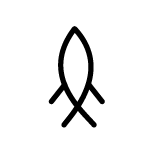
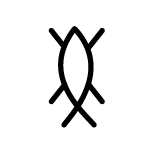


Text 1014 · Mohenjo-daro · seal · M267 M99 M87 M59 M67 M194 M342
Text 1629 · Mohenjo-daro · sealing · M267 M99 M67 M403 M87 M342
Text 2437 · Mohenjo-daro · ivory/bone rod · M6 M267 M99
Signs in reading order, first sign on the left. Text numbers are Mahadevan’s (1977). / marks a line break, … a damaged passage.