
Sign
M261
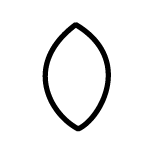
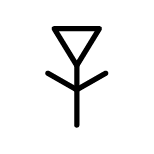
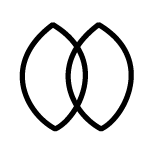
Looks like: simple leaf or diamond, possibly rotated 45 degrees
From the field-cady sign descriptions (Parpola 355). This describes the picture, not the meaning: a sign that looks like a fish may stand for a sound or another word.
Appears in 25 texts (27 uses), mostly on seals at Mohenjo-daro; found at the start, middle and end of texts. In the larger ICIT corpus its Wells equivalent W625 is in 11 texts, including at Dholavira.
Where it appears 25
Counts are distinct texts in the Mahadevan 1977 concordance (a text repeated on many moulded tablets counts once). 27 objects in all carry it.
| Object | Texts | Share |
|---|---|---|
| Seal | 19 | 76% |
| Sealing | 2 | 8% |
| Pottery | 2 | 8% |
| Other | 2 | 8% |
| Site | Texts | Share |
|---|---|---|
| Mohenjo-daro | 15 | 60% |
| Harappa | 6 | 24% |
| Chanhu-daro | 2 | 8% |
| Other sites | 2 | 8% |
| Where | Uses | Share |
|---|---|---|
| First sign | 9 | 36% |
| Inside | 13 | 52% |
| Last sign | 3 | 12% |
| Whole text | 0 | 0% |
Position counts use only texts with no damaged passage (25 uses).
In the ICIT corpus (Wells numbering)
W625: 11 distinct texts, 11 uses.
By object: seals 9, tablets 2. Top sites: Harappa 4, Mohenjo-daro 3, Dholavira 3, Lothal 1.
W790: 43 distinct texts, 55 uses. Wells lumps it with M373, M374, so these counts cover both.
By object: seals 20, pottery 7, tablets 7, other objects 6, copper tablets 3. Top sites: Mohenjo-daro 17, Harappa 15, Chanhu-daro 3, Dholavira 2, Kalibangan 2, Lothal 2.
W850: 38 distinct texts, 57 uses.
By object: seals 21, pottery 6, tablets 5, other objects 2, copper tablets 2, sealings 2. Top sites: Mohenjo-daro 20, Harappa 9, Dholavira 3, Chanhu-daro 2, Kalibangan 2, Kot-Diji 1.
Variants
Wells (ICIT) equivalent: W625, W790, W850.
Looks alike but used differently (probably a separate sign):
 M267drawing similarity 0.92, context similarity 0.51
 M277drawing similarity 0.89, context similarity 0.50
 M286drawing similarity 0.76, context similarity 0.55
Pairs from the prior project’s allograph model (image × distribution, signs with at least 8 uses).
Merged with other signs in alternative sign lists (used to test whether findings survive):


Neighbours and fixed pairs

Published readings 4
- Fuls · 2024Not tested on its own
a
Fuls 2024 IJAS 14(1):3-16 Fig.9 (values: Desset et al. 2022); Fuls says the scripts are NOT directly related
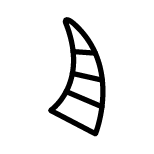
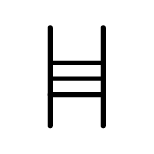
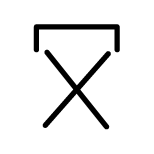
A Linear Elamite sign that looks like this one, with its Linear Elamite sound value. Fuls lists look-alikes; he does not claim the Indus sign has this value.
Yajnadevam’s sound value
- Yajnadevam · 2024Did not hold
b
Yajnadevam 2024 ‘A cryptanalytic decipherment of the Indus script’; per-sign key from yajnadevam/lipi xlits.csv via sources/field-cady_indus_valley_script_corpus/xlits.csv · test record
Part of a 714-value sound key that scores no better than keys fitted to noise (atlas 1.1).
- Yajnadevam · 2024Did not hold
r
Yajnadevam 2024 ‘A cryptanalytic decipherment of the Indus script’; per-sign key from yajnadevam/lipi xlits.csv via sources/field-cady_indus_valley_script_corpus/xlits.csv · test record
Part of a 714-value sound key that scores no better than keys fitted to noise (atlas 1.1).
From proposals.json and CATALOGUE.csv. A claim is listed under every sign it names.
Project tests 4
Role in the text
- Positional class
- Unclassified. Its raw label was opener, but it did not keep that label reliably. Grammar
- Functional reading
- NOUN 1.00. Unknown noun. dev n=16 texts; initial 0.31 final 0.12 Functional reading
Role names such as opener or noun are labels for positions, not tested meanings.
Mentioned in 4 result files
- Detached signs: a layout class, but not a class apart from the text2 lines. “Counterpoint: in ICIT-only texts W621 is last in 2/4 inline cases and medial in 2. W790 is spread across slots, but it also lumps in the diamond M261.”
- Self-labelling objects: do signs depict the object they are written on?2 lines. “…. M373 is a lens-shaped oval. In ICIT it is Wells W790, which the Mahadevan-Wells bridge lumps with M261 (diamond) and M374 (small oval). It is on 6 of 41 distinct bangle texts against 0.45 expected (…”
- Roof modifier vs context: is a roofed sign a “house of X”?1 line. “…. M-1646’s diamond is coded separately as W850. So the bangle sign is M373 or M374, not the diamond M261. The scan resolution cannot separate M373 from M374, so L2 counts both. Interlocking lenses M40…”
- A positional grammar of the Indus seal text1 line. “c9 opener 0.035 0.08 0.05 0.46 / 0.50 / 0.04 M293 0.38, M180 0.13, M409 0.06, M261 0.05, M400 0.03, M19 0.03, M214 0.03”
Example texts 3
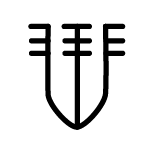
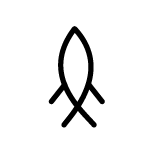


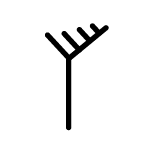
Text 1071 · Mohenjo-daro · seal · M261 M371 M59 M97 M114 M169

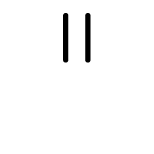
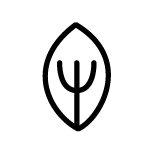
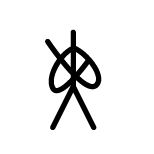
Text 1605 · Mohenjo-daro · sealing · M87 M403 M99 M387 M17 M261
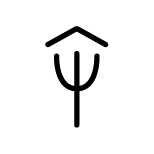


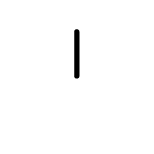

Text 2925 · Mohenjo-daro · bronze implement · M163 M252 M261 M134 M98 M391 M391
Signs in reading order, first sign on the left. Text numbers are Mahadevan’s (1977). / marks a line break, … a damaged passage.