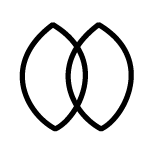
Sign
M403
Looks like: two overlapping upright leaf shapes
Adapted from the field-cady sign descriptions (Parpola 349). This describes the picture, not the meaning: a sign that looks like a fish may stand for a sound or another word.
Appears in 66 texts (93 uses), mostly on seals at Mohenjo-daro; usually sits inside a text. In the larger ICIT corpus its Wells equivalent W840 is in 94 texts, including at Dholavira.
Project finding: M403 is followed by M87 about half the time: a fixed pair Held up
Where it appears 66
Counts are distinct texts in the Mahadevan 1977 concordance (a text repeated on many moulded tablets counts once). 93 objects in all carry it.
| Object | Texts | Share |
|---|---|---|
| Seal | 43 | 65% |
| Sealing | 11 | 17% |
| Tablet | 6 | 9% |
| Pottery | 2 | 3% |
| Other | 4 | 6% |
| Site | Texts | Share |
|---|---|---|
| Mohenjo-daro | 40 | 61% |
| Harappa | 18 | 27% |
| Chanhu-daro | 4 | 6% |
| Lothal | 2 | 3% |
| Kalibangan | 1 | 2% |
| West Asian finds | 1 | 2% |
| Where | Uses | Share |
|---|---|---|
| First sign | 13 | 20% |
| Inside | 48 | 74% |
| Last sign | 3 | 5% |
| Whole text | 1 | 2% |
Position counts use only texts with no damaged passage (65 uses).
In the ICIT corpus (Wells numbering)
W840: 94 distinct texts, 132 uses.
By object: seals 53, tablets 28, other objects 5, pottery 4, sealings 4. Top sites: Mohenjo-daro 39, Harappa 32, Dholavira 8, Chanhu-daro 3, Lothal 2, Unknown 2.
Variants
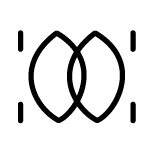
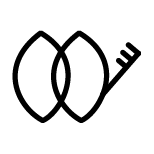

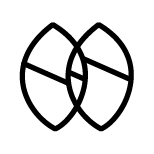
Neighbours and fixed pairs 2
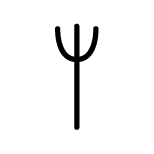
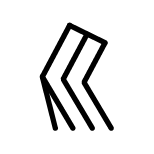
Signs read directly before or after it, counted in distinct texts, never across a line break or damage.
Fixed pairs
At least 5 texts, and one sign takes the other at least half the time.
Fixed sequences in the functional reading
Published readings 4
- Parpola · 2010Partly holds
muruku ‘ring, earring, bangle’ = rebus muruku ‘young man’ -> god Murukan
Parpola 2010, ‘A Dravidian solution to the Indus script problem’ (Coimbatore), Parpola 1994 Deciphering the Indus Script (CUP) · test record
M403 is followed by M87 as Parpola observed; the Murukan reading is not tested by this.
- Parpola · 1994, 2010Partly holds
fixed names of the god Murukan
Parpola 2010 pp. 23-29 · test record
Tested later (Parpola rules 3 and 4): M403 is followed by M87 far more than chance; the squirrel never follows M403. A fixed pair, not a reading.
- Halim & Vidale; Kenoyer · 1984Tested, see detail
stoneware-bangle inscriptions are workshop, batch or owner marks
experiments/bangle_oval RESULTS (secondary) · test record
experiments/bangle_oval H1 untestable (n = 0 new bangles); H4b leans workshop (5/27 vs 0/13, p = 0.15).
Yajnadevam’s sound value
- Yajnadevam · 2024Did not hold
d
Yajnadevam 2024 ‘A cryptanalytic decipherment of the Indus script’; per-sign key from yajnadevam/lipi xlits.csv via sources/field-cady_indus_valley_script_corpus/xlits.csv · test record
Part of a 714-value sound key that scores no better than keys fitted to noise (atlas 1.1).
From proposals.json and CATALOGUE.csv. A claim is listed under every sign it names.
Project tests 22
Established results
- M403 is followed by M87 about half the time: a fixed pairHeld up
Holds on held-out texts and at post-1977 sites. It is a fixed pair, not a reading; the red team labels it fragile.
- M103 (three strokes as two over one) is bound to M403Held up
A grade-A fixed sequence in the functional reading, from the prior project’s F7.
Role in the text
- Positional class
- Unclassified. Its raw label was numeral, but it did not keep that label reliably. Grammar
- Functional reading
- NOUN 1.00. Noun bound to M103 (3 as 2-over-1). M103->M403 27/28 (shaunmortal F7, replicated per site) Functional reading
Role names such as opener or noun are labels for positions, not tested meanings.
Mentioned in 20 result files
- Parpola rules 3 and 4: vēl as a fish stand-in, and Murukan’s fixed partners13 lines. “Rule 4 (M403 is followed by M87 or the squirrel): the M87 half passes, the squirrel half gets nothing.”
- Functional reading: a role grammar that “reads” every Indus text without phonetics4 lines. “Role grade A: 38 (openers M267/M391, M99, jar M342, M176, M1, M211, M169, M328, strokes, M343/344/345, M403).”
- Literature map: Indus script research, with emphasis on 2015-20264 lines. “…y tall strokes (F2, F5, F8; replicated on ICIT). Stroke layout matters: M103 (2-over-1) is bound to M403 (F7). Side 1 of a tablet carries the identity, side 2 a tall-stroke formula (F15). The cup form…”
- Meaning claims from culture, archaeology and history3 lines. “Fixed partners of M403 (Muruka-vēl, Muruka-ppiḷḷai). L1.”
- Core semantics: head direction and meaning classes of Indus name-core signs2 lines. “…ences directly next to a numeral): M284 0.71, M19 0.71, M409 0.50, M287 0.49, M325 0.44, M197 0.43, M403 0.42; M59 0.25. As a group, fish are not more number-adjacent than other signs (0.10 vs 0.12).…”
- Internal phonetics: does Indus spelling variation leak sound values?2 lines. “M103 M403: replaced by 10 different single signs, once each, so there is no single-sign equivalent.”
- Novel methods from other fields: results2 lines. “…hs always give p < 0.05). Inside a 6-sign frame they are mutually exclusive: M267 M99 [M65 M67 M72] M403 M87 M342.”
- Red team: pair_numeral_long claims A (number-names), B (counted items), C (long texts)2 lines. “Three of the advertised names have zero held-out tokens: tall 3 + M211, short 7 + M197, short 3 + M403.”
- Roof modifier vs context: is a roofed sign a “house of X”?2 lines. “L2 lens/oval on bangles, plus L2b M403 (exploratory);”
- Scorecard v1 (prereg scorecard_v1, hashed 2026-11-23T20:28:11Z, before any rating)2 lines. “Murukan partners: S (M403 → M87 fixed pair on held-out data and new sites; the squirrel half fails; the reading itself is not separated from “M403 + numeral 2”);”
- Bangle oval: a clean confirmatory test is not possible yet1 line. “H3 M403 on new bangles (exploratory) n = 0 untestable”
- Language hypotheses: results (historical-linguistics tester, 2026-11-14)1 line. “…107 = 5, M108/109 = 6, M110–112 = 7, M114 = 8, M115–117 = 9, M121 = 12). M103 is excluded (bound to M403, shaunmortal F7), and so is M99/100 (connective, F7). Plain fish = M59. Marked fish = M60, M65–…”
- Graphic modifiers: is there a paradigm beyond the corner ticks?1 line. “M404←M403 (ICIT W842) 1.0 vs 0.06 1.0 vs 0.06”
- Do Indus tablets carry counted numerals more than seals do? (prereg numerals_by_object, hashed 2026-11-23T20:41:22Z)1 line. “Harappa: 3 + M403 (4), 7 + M197 (2);”
- Pair graph, numeral distributions, long texts (Fable 5.2 plan F1, F2, F6)1 line. “n is small:* held-out has about 40% of dev’s numerals. Several lexeme heads (M197, M403, M211) have no held-out tokens.”
- Structure of the Indus texts: direction, inventory, positional classes, segmentation, grammar1 line. “…0.01): includes M342 vs M343/M344/M345/M348 (jar closer vs handled jar), M149 vs M150, M99 vs M100, M403 vs M406/M407, M124 vs M125. We disagree with shaunmortal M3 on M97~M98: the one-stroke variants…”
- Do later-published tablets carry the same fixed numeral pairs? (prereg tablet_fixed_pairs, hashed 2026-11-23)1 line. “Out of sample, the five pairs barely occur at all. The 396 later-catalogued Harappa tablet legends carry almost none of the M403 or M197 numeral pairs that the M77 tablets show.”
- Negative atlas: Indus routes closed or found undecidable1 line. “Result. D = −0.38 (both sites negative), p = 1.0 for “tablets count more”. Exploratory: the reverse tail p = 0.0005. Tablet numerals are fixed pairs (3 + M403, 7 + M197, 3 + M190, 7 + M194).”
- A positional grammar of the Indus seal text1 line. “c11 numeral 0.035 0.02 0.08 0.09 / 0.81 / 0.10 M89 0.50, M403 0.18, M149 0.18, M209 0.05, M321 0.02, M189 0.01, M297 0.01”
- Open Indus: reproducible tests on the Indus script1 line. “…e decompositions or silent determinatives were found; ligature candidates (M343-5, M348, M190, M103+M403) are firmly refuted (internal_phonetics).”
Example texts 3



 /

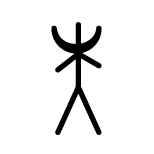
Text 1099 · Mohenjo-daro · seal · M50 M403 M343 M194 M8 M342 | M266
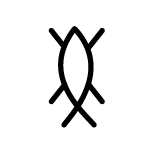

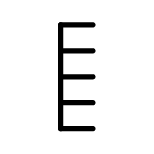
Text 1529 · Mohenjo-daro · ivory/bone rod · M67 M103 M403 M342 M176



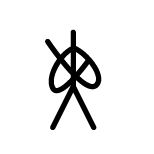

Text 1605 · Mohenjo-daro · sealing · M87 M403 M99 M387 M17 M261
Signs in reading order, first sign on the left. Text numbers are Mahadevan’s (1977). / marks a line break, … a damaged passage.