Mohenjo-daro and Harappa seal texts differ no more than two parts of one city
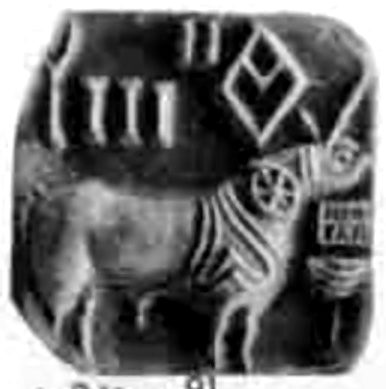
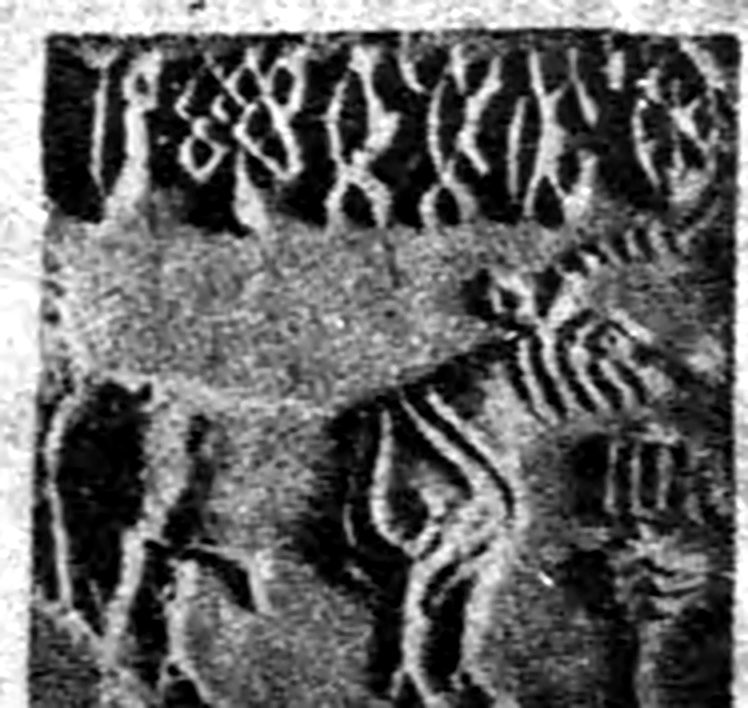
A classifier guessing a seal’s city from its signs does no better than when it guesses which half of Mohenjo-daro a seal came from. In Sumerian seal legends from Umma and Girsu, the city shows through names of every kind (owners, fathers, patrons); with all names removed, the gap between two cities shrinks to about the size of the gap between two reigns, just short of our margin. Compared directly, the Sumerian gap is clearly larger than the Indus one. For the two Indus cities, our 95% upper limit on any gap is about 0.11 AUC, but the data are not precise enough to call them identical. Under the name spellings we simulated, a local stock of one- or two-sign names on more than about a third of seals would have been caught; nearly every Sumerian seal carries a name. This covers seals from the two big cities: clay sealings and moulded tablets do differ between them, and Chanhu-daro, a small craft town, comes close to differing, partly because it ends texts with its own sign.
Earlier work: The sameness of Indus seals, weights and bricks across cities has long been noted (Parpola 1994; Yadav et al. 2017). New here: a test against a within-city baseline, with stated power, and a comparison with readable seal legends whose names are removed step by step.
AUC 0.51–0.55 (two editions, five sign lists); between-city minus within-city +0.01 to +0.03 (95% interval about ±0.10); power 98–100% for a 15% local stock; Ur III without place and god names still +0.09 to +0.27 above its floors
Red-teamed three times (21 Nov 2026). Dropped along the way: an earlier 0.49, Linear B as a comparison (its scribes differ more than its palaces), and the idea that Indus seals behave like name-free legends (that comparison is a tie, not a clean result).
Code and results: uniformity_paper redteam_uniformity_step2 chanhudaro_followup