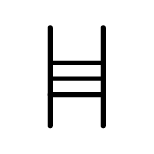
Sign
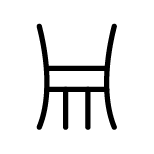
M186
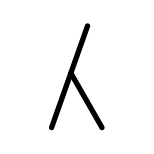
Looks like: two long vertical strokes, connected by multiple horizontal lines
From the field-cady sign descriptions (Parpola 296). This describes the picture, not the meaning: a sign that looks like a fish may stand for a sound or another word.
Appears in 31 texts (33 uses), mostly on seals at Mohenjo-daro; found at the start, middle and end of texts. In the larger ICIT corpus its Wells equivalent W315 is in 11 texts.
Where it appears 31
Counts are distinct texts in the Mahadevan 1977 concordance (a text repeated on many moulded tablets counts once). 33 objects in all carry it.
| Object | Texts | Share |
|---|---|---|
| Seal | 24 | 77% |
| Sealing | 6 | 19% |
| Pottery | 1 | 3% |
| Site | Texts | Share |
|---|---|---|
| Mohenjo-daro | 16 | 52% |
| Harappa | 9 | 29% |
| Lothal | 5 | 16% |
| Chanhu-daro | 1 | 3% |
| Where | Uses | Share |
|---|---|---|
| First sign | 10 | 32% |
| Inside | 17 | 55% |
| Last sign | 3 | 10% |
| Whole text | 1 | 3% |
Position counts use only texts with no damaged passage (31 uses).
In the ICIT corpus (Wells numbering)
W315: 11 distinct texts, 11 uses.
By object: seals 10, pottery 1. Top sites: Mohenjo-daro 7, Harappa 3, Lothal 1.
W317: 12 distinct texts, 13 uses.
By object: seals 7, sealings 3, tablets 2. Top sites: Harappa 4, Lothal 2, Mohenjo-daro 2, Chanhu-daro 1, Failaka 1, Dholavira 1.
Variants
Wells (ICIT) equivalent: W315, W317.
Looks alike but used differently (probably a separate sign):
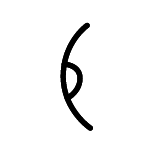
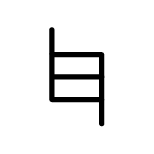 M254drawing similarity 0.68, context similarity 0.26
Pairs from the prior project’s allograph model (image × distribution, signs with at least 8 uses).
Merged with other signs in alternative sign lists (used to test whether findings survive):
- Merged by drawing (coarse) M254
Neighbours and fixed pairs

Published readings 2
Yajnadevam’s sound value
- Yajnadevam · 2024Did not hold
s
Yajnadevam 2024 ‘A cryptanalytic decipherment of the Indus script’; per-sign key from yajnadevam/lipi xlits.csv via sources/field-cady_indus_valley_script_corpus/xlits.csv · test record
Part of a 714-value sound key that scores no better than keys fitted to noise (atlas 1.1).
From proposals.json and CATALOGUE.csv. A claim is listed under every sign it names.
Project tests 2
Role in the text
- Positional class
- Medial (bootstrap stability 0.71) Grammar
- Functional reading
- NOUN 0.64; OPENER 0.36. Opener-class/core noun (unknown meaning). dev n=25 texts; initial 0.44 final 0.08 Functional reading
Role names such as opener or noun are labels for positions, not tested meanings.
Mentioned in 2 result files
- Core semantics: head direction and meaning classes of Indus name-core signs1 line. “A “tool” cluster (M171, M155, M127, M153, M186) was referent-homogeneous on dev (hypergeometric p = 0.002 before correction across about 70 cells), but did not replicate on held-out (coherence p = 0.6…”
- Internal phonetics: does Indus spelling variation leak sound values?1 line. “M190 ↔ M162 + M186: 0 events; the bigram never occurs.”
Example texts 3
 /

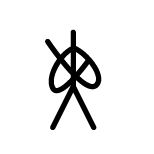
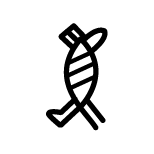
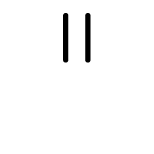
Text 1101 · Mohenjo-daro · seal · M17 M51 M245 M245 | M186 M149

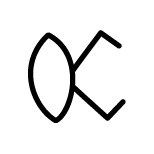
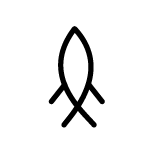

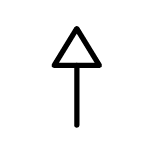
Text 2826 · Mohenjo-daro · sealing · M182 M186 M267 M99 M53 M59 M155 M211

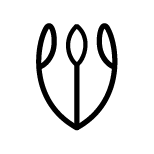

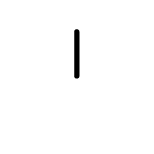
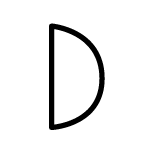
Text 4006 · Harappa · seal · M261 M367 M87 M98 M304 M186
Signs in reading order, first sign on the left. Text numbers are Mahadevan’s (1977). / marks a line break, … a damaged passage.