
Sign
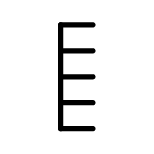
M254
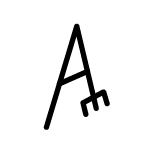
Looks like: small box with horizontal hatching, vertical lines coming from top left and bottom right corners
From the field-cady sign descriptions (Parpola 301). This describes the picture, not the meaning: a sign that looks like a fish may stand for a sound or another word.
Appears in 61 texts (73 uses), mostly on seals at Mohenjo-daro; usually ends a text. In the larger ICIT corpus its Wells equivalent W526 is in 9 texts, including at Nausharo.
Project finding: Validated closer: ends texts Held up
Where it appears 61
Counts are distinct texts in the Mahadevan 1977 concordance (a text repeated on many moulded tablets counts once). 73 objects in all carry it.
| Object | Texts | Share |
|---|---|---|
| Seal | 49 | 80% |
| Sealing | 9 | 15% |
| Tablet | 1 | 2% |
| Pottery | 1 | 2% |
| Other | 1 | 2% |
| Site | Texts | Share |
|---|---|---|
| Mohenjo-daro | 38 | 62% |
| Harappa | 14 | 23% |
| Lothal | 6 | 10% |
| Other sites | 2 | 3% |
| West Asian finds | 1 | 2% |
| Where | Uses | Share |
|---|---|---|
| First sign | 3 | 5% |
| Inside | 9 | 15% |
| Last sign | 49 | 80% |
| Whole text | 0 | 0% |
Position counts use only texts with no damaged passage (61 uses).
In the ICIT corpus (Wells numbering)
W526: 9 distinct texts, 13 uses.
By object: tablets 5, seals 4. Top sites: Harappa 5, Mohenjo-daro 2, Chanhu-daro 1, Nausharo 1.
W527: 58 distinct texts, 63 uses.
By object: seals 49, tablets 4, other objects 2, pottery 2, sealings 1. Top sites: Mohenjo-daro 36, Harappa 12, Lothal 6, Bala-kot 1, Rakhigarhi 1, Wattoowala 1.
Variants
Wells (ICIT) equivalent: W526, W527.
Looks alike but used differently (probably a separate sign):
 M186drawing similarity 0.68, context similarity 0.26
 M253drawing similarity 0.67, context similarity 0.20
Pairs from the prior project’s allograph model (image × distribution, signs with at least 8 uses).
Merged with other signs in alternative sign lists (used to test whether findings survive):
- Merged by drawing (coarse) M186
Neighbours and fixed pairs 4






Signs read directly before or after it, counted in distinct texts, never across a line break or damage.
Fixed pairs
 M222M25418 texts. M222 is followed by M254 100% of the time; M254 follows M222 31% of the time.
 M226M2547 texts. M226 is followed by M254 70% of the time; M254 follows M226 12% of the time.
At least 5 texts, and one sign takes the other at least half the time.
Fixed sequences in the functional reading
Published readings 2
Yajnadevam’s sound value
- Yajnadevam · 2024Did not hold
m
Yajnadevam 2024 ‘A cryptanalytic decipherment of the Indus script’; per-sign key from yajnadevam/lipi xlits.csv via sources/field-cady_indus_valley_script_corpus/xlits.csv · test record
Part of a 714-value sound key that scores no better than keys fitted to noise (atlas 1.1).
From proposals.json and CATALOGUE.csv. A claim is listed under every sign it names.
Project tests 8
Established results
- Validated closer: ends textsHeld up
Kept its class in 80% of bootstrap resamples; the Wells-list grammar agrees.
Role in the text
- Positional class
- Closer (bootstrap stability 0.80) Grammar
- Functional reading
- CLOSER 1.00. Closer of M216/M222/M226 formulae. final 82%; follows M216/M222/M226 Functional reading
Role names such as opener or noun are labels for positions, not tested meanings.
Mentioned in 7 result files
- Space and sealing: what small seals leave out, and whether sealings differ from seals (Fable plan 5, T4 and T6)3 lines. “Non-jar closers (M211, the M169 family, M12/M15, M254...): -0.021 share per doubling, Holm p = 0.004.”
- A positional grammar of the Indus seal text3 lines. “closer 7 0.141 M342 (776, 1.00), M211 (142, 1.00), M15 (58, 1.00), M254 (47, 0.80), M12 (42, 0.88), M14 (7, 0.95), M388 (4, 0.76)”
- Functional reading: a role grammar that “reads” every Indus text without phonetics1 line. “Role grade B: 23 (fish paradigm, bracketed fish, M123, M293, M150, M347, M8, M162, M15, M254, M12, M190, M407, M18, M387).”
- Proskouriakoff test: object fate vs sign content (board #33, N1)1 line. “closers: 7 signs (M342, M211, M15, M254, M12, M14, M388)”
- Structure of the Indus texts: direction, inventory, positional classes, segmentation, grammar1 line. “Closer 17 1,719 0.07 / 0.22 / 0.69 M342, M176, M211, M169, M1, M15, M12, M254, M328, M60 W740, W400, W390, W520, W090, W151, W700”
- One-to-many substitution (X YZ): does a single sign ever trade places with a 2-3 sign spelling?1 line. “M216 = M70/M65 M222 2 0.012 0.006 1096 M267 M99 M67 M216 M254 \ \ 1447 M53 M67 M70 M222 M254 M222 is M216 with an inner mark; fish + marked form ≈ plain form. Held-out k=1, q=0.02; ICIT W550 = W231 W5…”
- Toponym test (Jemdet Nasr city-seal method, Fable plan F7)1 line. “K4: M254, Lothal.”
Example texts 3



Text 1051 · Mohenjo-daro · seal · M106 M178 M254 M99 M163

Text 1533 · Mohenjo-daro · ivory/bone rod · M221 M254


Text 1559 · Mohenjo-daro · sealing · M397 M99 M216 M254
Signs in reading order, first sign on the left. Text numbers are Mahadevan’s (1977). / marks a line break, … a damaged passage.