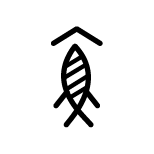
Sign
M75
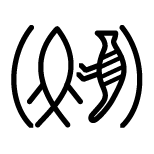
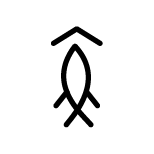
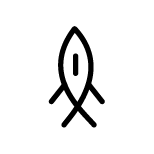
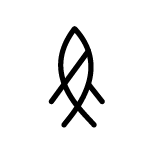
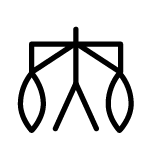
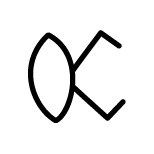
Looks like: hatched fish with a chevron above
Adapted from the field-cady sign descriptions (Parpola 048). This describes the picture, not the meaning: a sign that looks like a fish may stand for a sound or another word.
Appears in 12 texts (13 uses), mostly on seals at Mohenjo-daro; found at the start, middle and end of texts. In the larger ICIT corpus its Wells equivalent W243 is in 11 texts.
Project finding: The fish signs are variants of one sign Likely
Where it appears 12
Counts are distinct texts in the Mahadevan 1977 concordance (a text repeated on many moulded tablets counts once). 13 objects in all carry it.
| Object | Texts | Share |
|---|---|---|
| Seal | 12 | 100% |
| Site | Texts | Share |
|---|---|---|
| Mohenjo-daro | 9 | 75% |
| Harappa | 2 | 17% |
| West Asian finds | 1 | 8% |
| Where | Uses | Share |
|---|---|---|
| First sign | 4 | 33% |
| Inside | 6 | 50% |
| Last sign | 1 | 8% |
| Whole text | 1 | 8% |
Position counts use only texts with no damaged passage (12 uses).
In the ICIT corpus (Wells numbering)
W243: 11 distinct texts, 12 uses.
By object: seals 11. Top sites: Mohenjo-daro 8, Harappa 3.
Variants
Wells (ICIT) equivalent: W243.
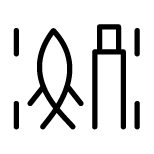
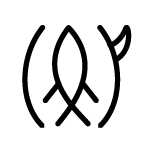
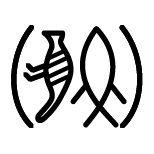
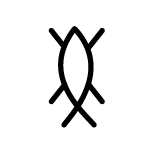
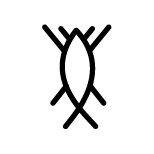
Merged with other signs in alternative sign lists (used to test whether findings survive):


Neighbours and fixed pairs




Published readings 2
- Mukhopadhyay · 2025, 2023Tested, see detail
fish signs denote gemstones, beads, jewellery and shiny metals (Dravidian min/mani; Mesopotamian ‘fish-eye stones’ NA4.IGI.KU6)
papers.ssrn.com (abstract only; full text not opened) · test record
Updated 2026-11-23: experiments/bead_workshops coded bead/jeweller units blind to signs: only 4 primary units with 32 inscribed objects at unseen sites; power about 21% at 1.5x under clustering (56% at 2x), so no test was run. The western-object side prediction fails at low power (experiments/meluhha goods.py).
Yajnadevam’s sound value
- Yajnadevam · 2024Did not hold
Yajnadevam 2024 ‘A cryptanalytic decipherment of the Indus script’; per-sign key from yajnadevam/lipi xlits.csv via sources/field-cady_indus_valley_script_corpus/xlits.csv · test record
Part of a 714-value sound key that scores no better than keys fitted to noise (atlas 1.1).
From proposals.json and CATALOGUE.csv. A claim is listed under every sign it names.
Project tests 5
Established results
- The fish signs are variants of one signLikely
Six fish-like signs replace each other in the same places and pair with the same neighbours. They behave like forms of one word, not like names of six different gods.
Role in the text
- Positional class
- Medial (bootstrap stability 0.76) Grammar
- Functional reading
- FISH-CLASS NOUN 1.00. Fish-class name element. fish paradigm: M65/67/70/72 swap with M59 in identical frames 10 vs 2.4 (novel_methods exp1/3) Functional reading
Role names such as opener or noun are labels for positions, not tested meanings.
Mentioned in 4 result files
- Core semantics: head direction and meaning classes of Indus name-core signs2 lines. “One core class is solid: the fish family (M59, M65, M67, M70, M72, M75). On held-out data:”
- Checking the foreign readings against published images (board task #12, H1)1 line. “…onflict. Gadd says no. 4 keeps only a “fish” sign and part of another. Mahadevan’s Gadd 4 is 9834 = M75, which is a fish, so that agrees. Laursen no. 18 / ICIT 5231 also cite Gadd 4 but read a man sig…”
- Language hypotheses: results (historical-linguistics tester, 2026-11-14)1 line. “…M403, shaunmortal F7), and so is M99/100 (connective, F7). Plain fish = M59. Marked fish = M60, M65–M75.”
- Open Indus: reproducible tests on the Indus script1 line. “The fish family (M59, M65, M67, M70, M72, M75) is a class of signs that substitute for each other. It substitutes as a set, forms more compounds than frequency predicts, compounds with itself, and kee…”
Example texts 3
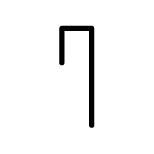


Text 1004 · Mohenjo-daro · seal · M59 M127 M245 M343 M75 M245 M245
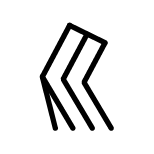


Text 4024 · Harappa · seal · M75 M180 M391 M252
Text 9834 · West Asian finds · seal · incomplete · M75
Signs in reading order, first sign on the left. Text numbers are Mahadevan’s (1977). / marks a line break, … a damaged passage.