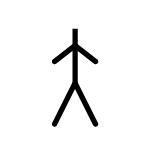
Sign
M1
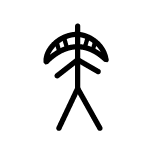
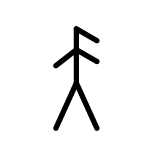
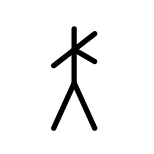
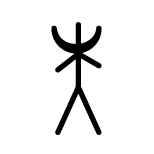
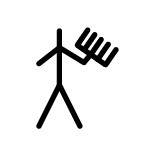
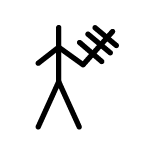
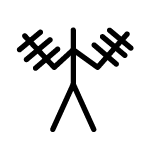
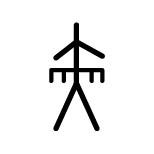
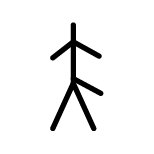
Looks like: person with two arms and two legs
Adapted from the field-cady sign descriptions (Parpola 013). This describes the picture, not the meaning: a sign that looks like a fish may stand for a sound or another word.
Appears in 91 texts (134 uses), mostly on seals at Mohenjo-daro; usually ends a text. In the larger ICIT corpus its Wells equivalent W090 is in 148 texts, including at Dholavira.
Where it appears 91
Counts are distinct texts in the Mahadevan 1977 concordance (a text repeated on many moulded tablets counts once). 120 objects in all carry it.
| Object | Texts | Share |
|---|---|---|
| Seal | 72 | 79% |
| Sealing | 13 | 14% |
| Tablet | 3 | 3% |
| Pottery | 1 | 1% |
| Other | 2 | 2% |
| Site | Texts | Share |
|---|---|---|
| Mohenjo-daro | 54 | 59% |
| Harappa | 17 | 19% |
| Lothal | 8 | 9% |
| Kalibangan | 6 | 7% |
| West Asian finds | 3 | 3% |
| Chanhu-daro | 2 | 2% |
| Other sites | 1 | 1% |
| Where | Uses | Share |
|---|---|---|
| First sign | 7 | 8% |
| Inside | 22 | 24% |
| Last sign | 63 | 68% |
| Whole text | 1 | 1% |
Position counts use only texts with no damaged passage (93 uses).
In the ICIT corpus (Wells numbering)
W090: 148 distinct texts, 195 uses.
By object: seals 96, tablets 32, pottery 8, sealings 6, other objects 5, copper tablets 1. Top sites: Mohenjo-daro 66, Harappa 46, Dholavira 8, Lothal 6, Unknown 4, Kalibangan 4.
Variants
Wells (ICIT) equivalent: W090.
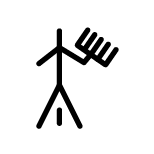
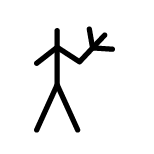
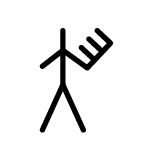
Looks alike but used differently (probably a separate sign):
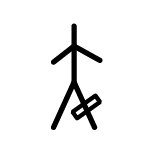
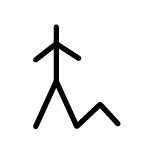
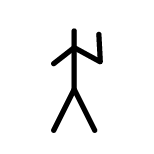 M18drawing similarity 0.67, context similarity 0.21
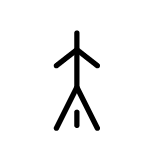
 M155drawing similarity 0.66, context similarity 0.23
Pairs from the prior project’s allograph model (image × distribution, signs with at least 8 uses).
Merged with other signs in alternative sign lists (used to test whether findings survive):
Neighbours and fixed pairs 2
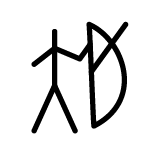
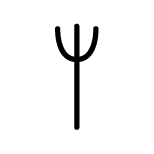




Signs read directly before or after it, counted in distinct texts, never across a line break or damage.
Fixed pairs
At least 5 texts, and one sign takes the other at least half the time.
Fixed sequences in the functional reading
Published readings 3
- Parpola · 1994Not tested on its own
āḷ ‘man, servant’ ~ āḷ ‘to rule’
Parpola 1994 (UNVERIFIED page; widely cited)
- Parpola (sign list) · 1994Tested, see detail
porter/carrier; Dravidian homophones include ‘lever of a steelyard’
experiments/assemblage x1: M1 storage signal was one seal (dead lead); WEIGHT units not enriched.
Yajnadevam’s sound value
- Yajnadevam · 2024Did not hold
a
Yajnadevam 2024 ‘A cryptanalytic decipherment of the Indus script’; per-sign key from yajnadevam/lipi xlits.csv via sources/field-cady_indus_valley_script_corpus/xlits.csv · test record
Part of a 714-value sound key that scores no better than keys fitted to noise (atlas 1.1).
From proposals.json and CATALOGUE.csv. A claim is listed under every sign it names.
Project tests 10
Role in the text
- Positional class
- Unclassified. Its raw label was post-closer, but it did not keep that label reliably. Grammar
- Functional reading
- POST-CLOSER CLITIC 0.90; CLOSER 0.10. Suffix after the closer. after M342 in 52/66 dev; closer class Functional reading
Role names such as opener or noun are labels for positions, not tested meanings.
Mentioned in 10 result files
- Literature map: Indus script research, with emphasis on 2015-20262 lines. “The jar M342 is the commonest sign and ends about 70% of the texts it appears in. Other terminal signs: M176, M211, M1.”
- Structure of the Indus texts: direction, inventory, positional classes, segmentation, grammar2 lines. “Asymmetry. The first position is diverse: 291 sign types, H=6.69 bits. The last position is concentrated: 196 types, H=4.94 bits, with the top five closers M342, M176, M211, M169, M1.”
- Stratigraphic half-life: do name signs turn over faster than frame signs? (Fable plan 2, item 9)1 line. “Signs that run late in both Harappa excavations: M127, M387, M197, M341, M72, M173, opener M293. Early in both: closer M12, M375, opener M205, M1, title element M347.”
- Logogram anchors: can any sign be given a meaning from pictures alone?1 line. “…sign with each other or with the copper archer legend. Example: 2420 (three-faced personage) reads M1 M3-M216-M229-M344-M59-M342.”
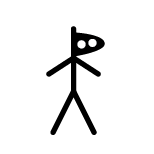
- Graphic modifiers: is there a paradigm beyond the corner ticks?1 line. “Untestable in any set (fewer than 3 bases with tokens): HAT on the man sign (one base, M1, with 4 hats), RAYS4, and FRAME on held-out. LEFTPOST, PAIRBARS and FRAME are thin everywhere.”
- Phonetic grid (automated Kober triplets + Ventris grid)1 line. “M176 behaves most like a bound postposed element (suffix or clitic) of the preceding unit. It is final, follows many different signs, is followed by few, is optional, and alternates with a small set (…”
- Research sweep, 2024-2026: methods and data the project has not used (board task #9, H5)1 line. “…excavator and sign reading not given. “Umm al” appears once in the repo; this object is not in the M1 foreign corpus. Task added (M1).”
- slot_function: results1 line. “Caveat: only 15 Wells signs map to M1-M46 through the bridge, so ICIT coverage of the human-figure class is partial.”
- Umm al-Quwain “Indus-sign seal” (board task #16, M1, agent H4)1 line. “Umm al-Quwain “Indus-sign seal” (board task #16, M1, agent H4)”
- A positional grammar of the Indus seal text1 line. “Post-closer: M176, M1 and a few others can follow a closer as the very last sign. This class was not stable”
Example texts 3

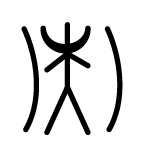

Text 1072 · Mohenjo-daro · seal · M215 M298 M9 M342 M1
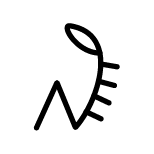
Text 1607 · Mohenjo-daro · sealing · M18 M342 M48 M342 M1

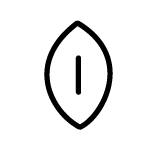
Text 2924 · Mohenjo-daro · bronze implement · M108 M342 M1 M375
Signs in reading order, first sign on the left. Text numbers are Mahadevan’s (1977). / marks a line break, … a damaged passage.