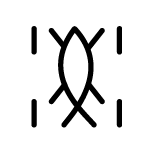
Sign
M68
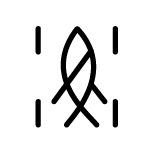
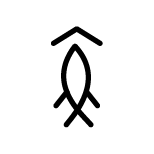
Looks like: fish with extra whiskers on cheeks, caged by four small vertical strokes
From the field-cady sign descriptions (Parpola 063). This describes the picture, not the meaning: a sign that looks like a fish may stand for a sound or another word.
Appears in 8 texts (9 uses), mostly on seals at Mohenjo-daro; usually ends a text. In the larger ICIT corpus its Wells equivalent W241 is in 12 texts.
Where it appears 8
Counts are distinct texts in the Mahadevan 1977 concordance (a text repeated on many moulded tablets counts once). 9 objects in all carry it.
| Object | Texts | Share |
|---|---|---|
| Seal | 8 | 100% |
| Site | Texts | Share |
|---|---|---|
| Mohenjo-daro | 8 | 100% |
| Where | Uses | Share |
|---|---|---|
| First sign | 0 | 0% |
| Inside | 3 | 38% |
| Last sign | 5 | 62% |
| Whole text | 0 | 0% |
Position counts use only texts with no damaged passage (8 uses).
In the ICIT corpus (Wells numbering)
W241: 12 distinct texts, 12 uses.
By object: seals 11, pottery 1. Top sites: Mohenjo-daro 11, Harappa 1.
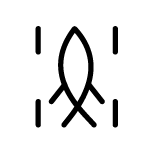
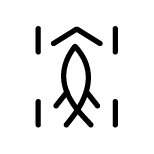
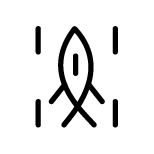
Variants
Neighbours and fixed pairs

Published readings 2
- Mukhopadhyay · 2025, 2023Tested, see detail
fish signs denote gemstones, beads, jewellery and shiny metals (Dravidian min/mani; Mesopotamian ‘fish-eye stones’ NA4.IGI.KU6)
papers.ssrn.com (abstract only; full text not opened) · test record
Updated 2026-11-23: experiments/bead_workshops coded bead/jeweller units blind to signs: only 4 primary units with 32 inscribed objects at unseen sites; power about 21% at 1.5x under clustering (56% at 2x), so no test was run. The western-object side prediction fails at low power (experiments/meluhha goods.py).
Yajnadevam’s sound value
- Yajnadevam · 2024Did not hold
Yajnadevam 2024 ‘A cryptanalytic decipherment of the Indus script’; per-sign key from yajnadevam/lipi xlits.csv via sources/field-cady_indus_valley_script_corpus/xlits.csv · test record
Part of a 714-value sound key that scores no better than keys fitted to noise (atlas 1.1).
From proposals.json and CATALOGUE.csv. A claim is listed under every sign it names.
Project tests 7
Role in the text
- Positional class
- Unclassified. Its raw label was numeral, but it did not keep that label reliably. Grammar
- Functional reading
- BRACKETED-FISH CLOSER 0.99; FISH-CLASS NOUN 0.01. Fish-class element in the closer slot (bracketed fish). final 60% vs 5% for plain fish; replicated held-out p=0.03 (novel_methods T6) Functional reading
Role names such as opener or noun are labels for positions, not tested meanings.
Mentioned in 7 result files
- Novel methods from other fields: results3 lines. “…h sign moves it to the end of the text. Five fish signs have bracketed forms (M59→M60, M65→M66, M67→M68, M70→M71, M72→M73). Plain fish signs end a text 5% of the time. Their bracketed forms end it 60%…”
- Consensus corpus: the nine headline tests at the real transcription error rate1 line. “The ticked fish follow the same pattern: M66=W236 (3/3), M68=W241, and M71=W232 and M73=W234 by analogy.”
- Internal phonetics: does Indus spelling variation leak sound values?1 line. “fish ticks (M60, M66, M68, M71, M73) 2 / 1.50 (0.44) 0 / 0”
- Red team: attacks on the project’s positive claims1 line. “M68 W241 W240”
- Red team #38: does the consensus corpus result (#35, N3) hold up?1 line. “…nges. It was written separately and run on all 469 objects. It finds every N3 primary change except M68, M71 and M73 (no data) and M175/M205 (below my threshold). It also finds the same three doubled…”
- Red team: do ticked fish really cluster by block at Mohenjo-daro?1 line. “Two pairs merge: the M87 M60 pair in 12/V, and the M99 M68 pair in block 6.”
- reg_findspot: do seals found in one house or room share signs?1 line. “seals carry a ticked fish (M60, M66, M68, M71 or M73). Block 12 has 4 of its 19 seals, all in house 12/V (0.65 expected). Blocks 6, 3 and 18 have 2 each. Blocks 1 and 7, the two largest, have 1 of 151…”
Example texts 3
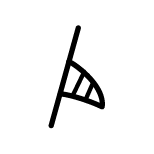


Text 1036 · Mohenjo-daro · seal · M76 M402 M68 M287 M267
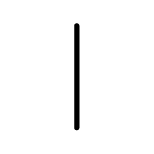
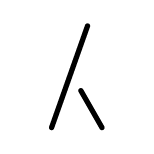
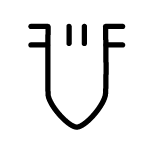
Text 1535 · Mohenjo-daro · seal · M86 M124 M344 M68

Text 2199 · Mohenjo-daro · seal · M286 M99 M68
Signs in reading order, first sign on the left. Text numbers are Mahadevan’s (1977). / marks a line break, … a damaged passage.