
Sign
M391
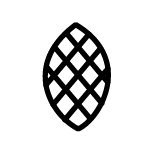
Looks like: oval with six spokes, like a spoked wheel
Adapted from the field-cady sign descriptions (Parpola 378). This describes the picture, not the meaning: a sign that looks like a fish may stand for a sound or another word.
Appears in 168 texts (195 uses), mostly on seals at Mohenjo-daro; usually starts a text. In the larger ICIT corpus its Wells equivalent W820 is in 210 texts, including at Dholavira.
Project finding: Validated opener: starts texts Held up
Where it appears 168
Counts are distinct texts in the Mahadevan 1977 concordance (a text repeated on many moulded tablets counts once). 182 objects in all carry it.
| Object | Texts | Share |
|---|---|---|
| Seal | 146 | 87% |
| Sealing | 17 | 10% |
| Tablet | 1 | 1% |
| Pottery | 1 | 1% |
| Other | 3 | 2% |
| Site | Texts | Share |
|---|---|---|
| Mohenjo-daro | 114 | 68% |
| Harappa | 34 | 20% |
| Lothal | 10 | 6% |
| Kalibangan | 8 | 5% |
| Chanhu-daro | 1 | 1% |
| Other sites | 1 | 1% |
| Where | Uses | Share |
|---|---|---|
| First sign | 124 | 70% |
| Inside | 37 | 21% |
| Last sign | 15 | 8% |
| Whole text | 1 | 1% |
Position counts use only texts with no damaged passage (177 uses).
In the ICIT corpus (Wells numbering)
W820: 210 distinct texts, 244 uses.
By object: seals 165, tablets 25, pottery 9, sealings 7, other objects 4. Top sites: Mohenjo-daro 116, Harappa 51, Dholavira 11, Lothal 9, Kalibangan 8, Unknown 3.
Variants
Wells (ICIT) equivalent: W820.
Looks alike but used differently (probably a separate sign):
 M97drawing similarity 0.66, context similarity 0.25
 M98drawing similarity 0.67, context similarity 0.28
 M373drawing similarity 0.74, context similarity 0.58
 M375drawing similarity 0.79, context similarity 0.47
 M381drawing similarity 0.76, context similarity 0.35
 M387drawing similarity 0.81, context similarity 0.48
 M389drawing similarity 0.81, context similarity 0.54
Pairs from the prior project’s allograph model (image × distribution, signs with at least 8 uses).
Merged with other signs in alternative sign lists (used to test whether findings survive):





Neighbours and fixed pairs


Published readings 1
Yajnadevam’s sound value
- Yajnadevam · 2024Did not hold
r
Yajnadevam 2024 ‘A cryptanalytic decipherment of the Indus script’; per-sign key from yajnadevam/lipi xlits.csv via sources/field-cady_indus_valley_script_corpus/xlits.csv · test record
Part of a 714-value sound key that scores no better than keys fitted to noise (atlas 1.1).
From proposals.json and CATALOGUE.csv. A claim is listed under every sign it names.
Project tests 24
Established results
- Validated opener: starts textsHeld up
Kept its class in 100% of bootstrap resamples; the Wells-list grammar agrees.
Role in the text
- Positional class
- Opener (bootstrap stability 0.99) Grammar
- Functional reading
- OPENER 1.00. Opening-formula word (seal register). opener class (structure §3); seal-enriched, replicated ICIT W820 (context Q2) Functional reading
Role names such as opener or noun are labels for positions, not tested meanings.
Mentioned in 23 result files
- Phonetic grid (automated Kober triplets + Ventris grid)6 lines. “…clusive. Alternation at the start is at least as strong as at the end. It comes from openers (M267, M391, M293-M123) swapping in front of the same continuation, which is substitution of whole words, n…”
- Functional reading: a role grammar that “reads” every Indus text without phonetics5 lines. “Main causes of parse failure in held-out texts: an opener that is not first (M267 16, M391 9, M150 5: “pre-opener” material such as M238 M267 M99 M104 M169), M99 at text start (4), and bare numerals.…”
- A positional grammar of the Indus seal text5 lines. “Opener: a small set of signs that start texts. M267 and M391 make up 86% of the main opener class.”
- Novel methods from other fields: results4 lines. “{M267, M391, M336, M89, M17, ...}: openers”
- reg_harappa: do the Mohenjo-daro findspot results hold at Harappa?3 lines. “Inconclusive (power below 0.5 for both planted patterns): M267, M293, M391 and the M162 count frame at big-square level, and every class at sub-square level.”
- Structure of the Indus texts: direction, inventory, positional classes, segmentation, grammar3 lines. “Rejected on drawing: M391~M286, M177~M397 (an artefact of the blurred images).”
- Administrative archaeology: relational readings without sounds2 lines. “…cincts. Title blocks (M336-M89, M51-M130-M149, M249-M161, M387-M59, M171-M59), openers (M267, M293, M391, M150, M216) and register signs (M176, final M342, final M211) were tested against excavation a…”
- Pre- vs post-firing vessel marks (Fable 5.2 plan 4, item S1)2 lines. “Lead (post hoc, contaminated): painted pots carry opener-type signs, often alone, not the jar sign. M391 (W820) appears on 4 of 25 painted texts against 7 of 384 graffiti (Fisher p = 0.003, uncorrecte…”
- Internal phonetics: does Indus spelling variation leak sound values?2 lines. “After the opener+connective: M387, M389, M67, M65, M102, M86, M87 after M99. M267 and M391 before M99.”
- Literature map: Indus script research, with emphasis on 2015-20262 lines. “Openers: M267 + M99, and M391.”
- Potter’s marks and the frame signs (Fable 5.2 plan 2, item 7)2 lines. “The openers M267 and M391 have no early attestation under any definition, and the closer M211 has only one loose match. So the frame did not arrive ready-made from pot marks. At most, one closer and o…”
- Red team: Harappa relative chronology (half_life P3)2 lines. “M391 early -2.5 / -0.1 0.064 10/22 HARP only”
- Red team of local_repeats: the travelling numeral formula (R1) and “texts grow, never shrink” (R2)2 lines. “sources/shaunmortal_indus/STATE.md:336 already lists repeated square-seal texts “opener + stroke + tree (M267-M99-M102-M161 x5, M267-M99-M104-M161 x5, M391-M99-M102-M161 x4)”.”
- reg_findspot: do seals found in one house or room share signs?2 lines. “M391 p=0.63 p=0.45”
- Context and meaning: which signs go with non-textual context?1 line. “…M407/W845, M18/W095, M97-M25, M252-M97; rod M342-M176 and M176; tablet M176/W400; seal M99/W002 and M391/W820. Failed: the M77 “sealing” survivors. Mapping caveat: M77 “sealing” at Harappa and Mohenjo…”
- Grammar: a validated positional grammar of the Indus seal text (fable plan 6, part B)1 line. “opener 10 7.3% M267, M391, M293”
- HARP prediction pack (sealed 2026-11-19, before the HARP spreadsheet)1 line. “C2: opener-type signs M391/M343/M267 commoner on pre-firing marks (0.92).”
- Red team: attacks on the project’s positive claims1 line. “…der beats all permutations in 42% of cases (chance 3%). This is unchanged when the jar, M176, M267, M391 and M99 are deleted. Among 1,505 distinct short texts, only 8 sign multisets occur in two order…”
- Red team: pair_numeral_long claims A (number-names), B (counted items), C (long texts)1 line. “…fter* the sign gives 34/40 kept vs 0.39 expected. The fixed pairs are M336 + tall 3, M403 + tall 2, M391 + short 1 and M99 + tall 2.”
- Red team: the shape-only merge list (board #40, attacks #36 / experiments/signlist_shape)1 line. “M384 = M391 5, 142 −0.0011 (−0.0057, +0.0020)”
- Do the ranked findings survive other sign lists?1 line. “…59/M70/M72 apart from ticked M60/M71/M73. At the coarsest cut M267 merges with 9 other diamonds and M391 with 9 ovals.”
- Negative atlas: Indus routes closed or found undecidable1 line. “…. P2 inconclusive (10 painted texts). Form p = 0.08, confounded with stamping. Post hoc, not blind: M391 on 4/25 painted vs 7/384 graffiti (p = 0.003 uncorrected, 3 of 4 from Kutch); jar M342 on 1/25…”
- Open Indus: reproducible tests on the Indus script1 line. “…beats every permutation of its own signs far above chance, and still does with the jar, M176, M267, M391 and M99 deleted. It fits a grammar or a fixed formula equally: the test shows sequential struct…”
Example texts 3

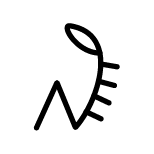
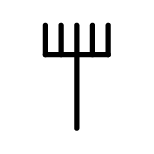
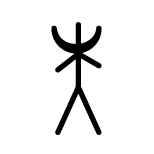

Text 1010 · Mohenjo-daro · seal · M391 M99 M48 M171 M8 M342

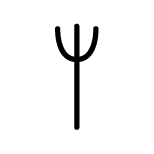
Text 2867 · Mohenjo-daro · sealing · M391 M99 M249 M162 M342



Text 2925 · Mohenjo-daro · bronze implement · M163 M252 M261 M134 M98 M391 M391
Signs in reading order, first sign on the left. Text numbers are Mahadevan’s (1977). / marks a line break, … a damaged passage.