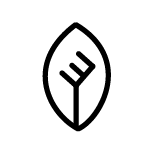
Sign
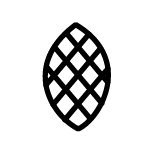
M389
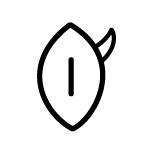
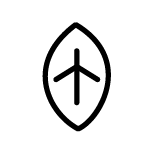
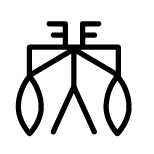
Looks like: leaf shape with a branched mark rising from the bottom
Open Indus description, written from the drawing. This describes the picture, not the meaning: a sign that looks like a fish may stand for a sound or another word.
Appears in 82 texts (134 uses), mostly on seals at Mohenjo-daro; found at the start, middle and end of texts.
Where it appears 82
Counts are distinct texts in the Mahadevan 1977 concordance (a text repeated on many moulded tablets counts once). 132 objects in all carry it.
| Object | Texts | Share |
|---|---|---|
| Seal | 68 | 83% |
| Sealing | 7 | 9% |
| Copper tablet | 6 | 7% |
| Other | 1 | 1% |
| Site | Texts | Share |
|---|---|---|
| Mohenjo-daro | 52 | 63% |
| Harappa | 26 | 32% |
| Lothal | 3 | 4% |
| Kalibangan | 1 | 1% |
| Where | Uses | Share |
|---|---|---|
| First sign | 32 | 38% |
| Inside | 48 | 57% |
| Last sign | 3 | 4% |
| Whole text | 1 | 1% |
Position counts use only texts with no damaged passage (84 uses).
No Wells equivalent in the concordance this project uses, so there are no ICIT counts.
Variants
Probably the same sign (looks alike and is used alike):
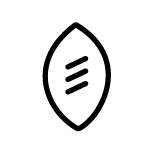
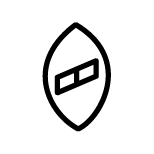
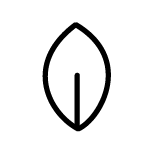 M386drawing similarity 0.89, context similarity 0.87
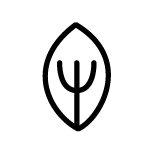 M387drawing similarity 0.85, context similarity 0.94
Looks alike but used differently (probably a separate sign):
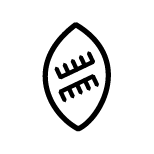
 M391drawing similarity 0.81, context similarity 0.54
Pairs from the prior project’s allograph model (image × distribution, signs with at least 8 uses).
Merged with other signs in alternative sign lists (used to test whether findings survive):



Neighbours and fixed pairs 2
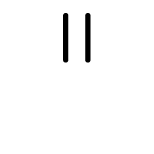
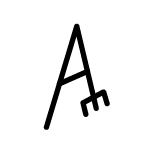

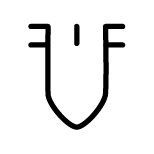
Signs read directly before or after it, counted in distinct texts, never across a line break or damage.
Fixed pairs
At least 5 texts, and one sign takes the other at least half the time.
Fixed sequences in the functional reading
Published readings
No published reading of this sign is in the project’s lists.
From proposals.json and CATALOGUE.csv. A claim is listed under every sign it names.
Project tests 15
Role in the text
- Positional class
- Medial (bootstrap stability 0.94) Grammar
- Functional reading
- NOUN 1.00. Unknown noun. dev n=65 texts; initial 0.36 final 0.03 Functional reading
Role names such as opener or noun are labels for positions, not tested meanings.
Mentioned in 15 result files
- Core semantics: head direction and meaning classes of Indus name-core signs5 lines. “fish keep a stable set of partners, M53, M387, M343, M171, M389 (24% of fish-partner tokens vs a 13% baseline, p = 0.0003).”
- reg_chrono: does sign use change with decimal depth inside one site?4 lines. “T1b best sign (BH over 136) M112 later, q 0.054 M389 later, M293 later, q 0.19 none passes”
- Consensus corpus: the nine headline tests at the real transcription error rate3 lines. “About a third of the old figure was our mapping, not the editors: the fish pairing, M389, three one-to-many entries, and Wells’ single signs for doubled Mahadevan signs.”
- Copper tablets: calendar series, tallies or amulets?3 lines. “T02 12/16/16 horned archer M389 M407 M124 M169 M373 M287 M342 horned-U (M362/363/364) x8”
- Novel methods from other fields: results2 lines. “{M99, M87, M67, M65, M72, M86, M389, M171, M70, ...}: connective, tall strokes and fish variants”
- Red team: the shape-only merge list (board #40, attacks #36 / experiments/signlist_shape)2 lines. “…ected concordance (consensus_corpus/out/concordance.json primary, which fixes fish M65/67/70/72 and M389). Where Mahadevan’s sign has several W partners, only its first is merged, so Wells’ own splits…”
- Structure of the Indus texts: direction, inventory, positional classes, segmentation, grammar2 lines. “M386→M387 and M389→M387 (leaf outline; p=0.88, 0.40)”
- A positional grammar of the Indus seal text2 lines. “c5 medial 0.104 0.12 0.01 0.25 / 0.75 / 0.00 M67 0.22, M65 0.16, M72 0.16, M53 0.12, M387 0.10, M389 0.09, M70 0.07”
- Context and meaning: which signs go with non-textual context?1 line. “…er-tablet legends, e.g. M65-M336-M89-M407-M169-M183-M169 = hare; M204-M245-M358-M342 = ox-antelope; M389-M407-M124-M169-M373-M287-M342 = horned bovine personage Label or name *of the depicted figure*,…”
- Internal phonetics: does Indus spelling variation leak sound values?1 line. “After the opener+connective: M387, M389, M67, M65, M102, M86, M87 after M99. M267 and M391 before M99.”
- Logogram anchors: can any sign be given a meaning from pictures alone?1 line. “…comb top, horns sweeping back and curling “goat-antelope with horns arching back” (fs135) 1 legend (M389-M72-M326-M342); 4 tablets (MD 3313, 3343 = M-597, M-1550) vs 3 M77 picture tablets of this exac…”
- Graphic modifiers: is there a paradigm beyond the corner ticks?1 line. “M390←M389 1.0 vs 0.00 –”
- Red team #38: does the consensus corpus result (#35, N3) hold up?1 line. “M389=W806: 14/18 (W803 takes 3). M387=W803: 9/9. M162=W390: 32/32. M216=W550: 6/6.”
- Sign list from shape plus context: 400 or 700 signs?1 line. “leaf-in-oval M386 = M387 = M389;”
- Open Indus: reproducible tests on the Indus script1 line. “…n frequency predicts, compounds with itself, and keeps a stable partner set (M53, M387, M343, M171, M389). Parpola’s “fish = deity name” is not supported: it failed held-out, and fish pairing with fis…”
Example texts 3

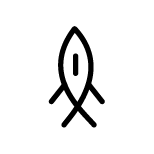
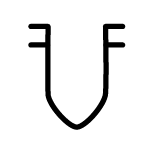
Text 1095 · Mohenjo-daro · seal · M150 M123 M70 M389 M342
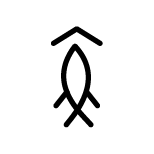

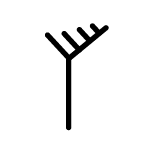
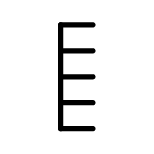
Text 1615 · Mohenjo-daro · sealing · M389 M65 M249 M169 M342 M176
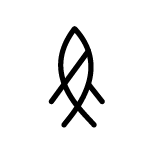
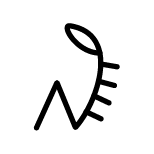
Text 1701 · Mohenjo-daro · copper tablet · M389 M72 M48 M342
Signs in reading order, first sign on the left. Text numbers are Mahadevan’s (1977). / marks a line break, … a damaged passage.