
Sign
M205
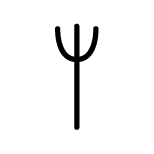
Looks like: curved, banded shape like a horn
Open Indus description, written from the drawing. This describes the picture, not the meaning: a sign that looks like a fish may stand for a sound or another word.
Appears in 20 texts (26 uses), mostly on seals at Mohenjo-daro; usually starts a text. In the larger ICIT corpus its Wells equivalent W491 is in 14 texts.
Where it appears 20
Counts are distinct texts in the Mahadevan 1977 concordance (a text repeated on many moulded tablets counts once). 26 objects in all carry it.
| Object | Texts | Share |
|---|---|---|
| Seal | 14 | 70% |
| Sealing | 2 | 10% |
| Tablet | 3 | 15% |
| Other | 1 | 5% |
| Site | Texts | Share |
|---|---|---|
| Mohenjo-daro | 10 | 50% |
| Harappa | 6 | 30% |
| Kalibangan | 2 | 10% |
| Chanhu-daro | 1 | 5% |
| Lothal | 1 | 5% |
| Where | Uses | Share |
|---|---|---|
| First sign | 12 | 60% |
| Inside | 8 | 40% |
| Last sign | 0 | 0% |
| Whole text | 0 | 0% |
Position counts use only texts with no damaged passage (20 uses).
In the ICIT corpus (Wells numbering)
W491: 14 distinct texts, 18 uses.
By object: seals 7, tablets 5, pottery 1, sealings 1. Top sites: Harappa 7, Mohenjo-daro 3, Kalibangan 2, Lothal 2.
Variants
Wells (ICIT) equivalent: W491.
Neighbours and fixed pairs



Published readings 1
Yajnadevam’s sound value
- Yajnadevam · 2024Did not hold
a
Yajnadevam 2024 ‘A cryptanalytic decipherment of the Indus script’; per-sign key from yajnadevam/lipi xlits.csv via sources/field-cady_indus_valley_script_corpus/xlits.csv · test record
Part of a 714-value sound key that scores no better than keys fitted to noise (atlas 1.1).
From proposals.json and CATALOGUE.csv. A claim is listed under every sign it names.
Project tests 7
Role in the text
- Positional class
- Unclassified. Its raw label was medial, but it did not keep that label reliably. Grammar
- Functional reading
- OPENER 1.00. Opener-class word (unknown meaning). dev n=13 texts; initial 0.69 final 0.00 Functional reading
Role names such as opener or noun are labels for positions, not tested meanings.
Mentioned in 7 result files
- Consensus corpus: the nine headline tests at the real transcription error rate1 line. “Three one-to-many entries were narrowed (M162, M216, M387). Three Wells splits were added as alternates (M175, M205, M210).”
- Stratigraphic half-life: do name signs turn over faster than frame signs? (Fable plan 2, item 9)1 line. “Signs that run late in both Harappa excavations: M127, M387, M197, M341, M72, M173, opener M293. Early in both: closer M12, M375, opener M205, M1, title element M347.”
- Internal phonetics: does Indus spelling variation leak sound values?1 line. “…reached q≈0.048. All are slot paradigms (numerals M102\ M106, M112\ M245; closers M15\ M342; M204\ M205; M341\ M373; M124\ M348; M135\ M296). They come from a first run with a 1,000-replicate empiric…”
- Red team: Harappa relative chronology (half_life P3)1 line. “…fe’s lists: late M127, M387, M197, M341, M293 and early M12, M347 agree. M72, M173 (late) and M375, M205, M1 (early) are weaker here ( z < 1.3).”
- Red team #38: does the consensus corpus result (#35, N3) hold up?1 line. “The three Wells splits (M175, M205, M210) rest on 3, 3 and 3 observations. They are weak, but they hardly move the rate.”
- redteam_size: is the “small seals keep their closers” omission order just “texts have one closer”?1 line. “Example: M267 M99 M67 M205 M245 M342 = T4’s W817 W002 W240 W495 W615 W740.”
- reg_chrono: does sign use change with decimal depth inside one site?1 line. “half_life’s Harappa markers, applied to Mohenjo-daro depth, point the wrong way: late signs M127, M387, M197, M341, M72, M293 vs early signs M12, M375, M205, M347 give p = 0.83.”
Example texts 3



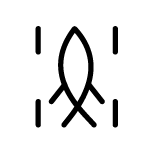
Text 1090 · Mohenjo-daro · seal · M197 M336 M342 M205 M60

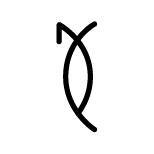
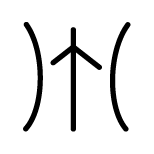 /

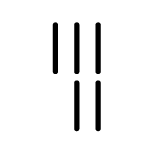
Text 1471 · Mohenjo-daro · miscellaneous · M240 M302 M156 | M104 M205 M107

Text 4122 · Harappa · seal · M205 M102 M162
Signs in reading order, first sign on the left. Text numbers are Mahadevan’s (1977). / marks a line break, … a damaged passage.