Book · 2026
The full edition of Linear Elamite, the script read through kings’ names
Desset and colleagues · Linear Elamite Texts from Susa (OrientLab SM 10)
In a sentence
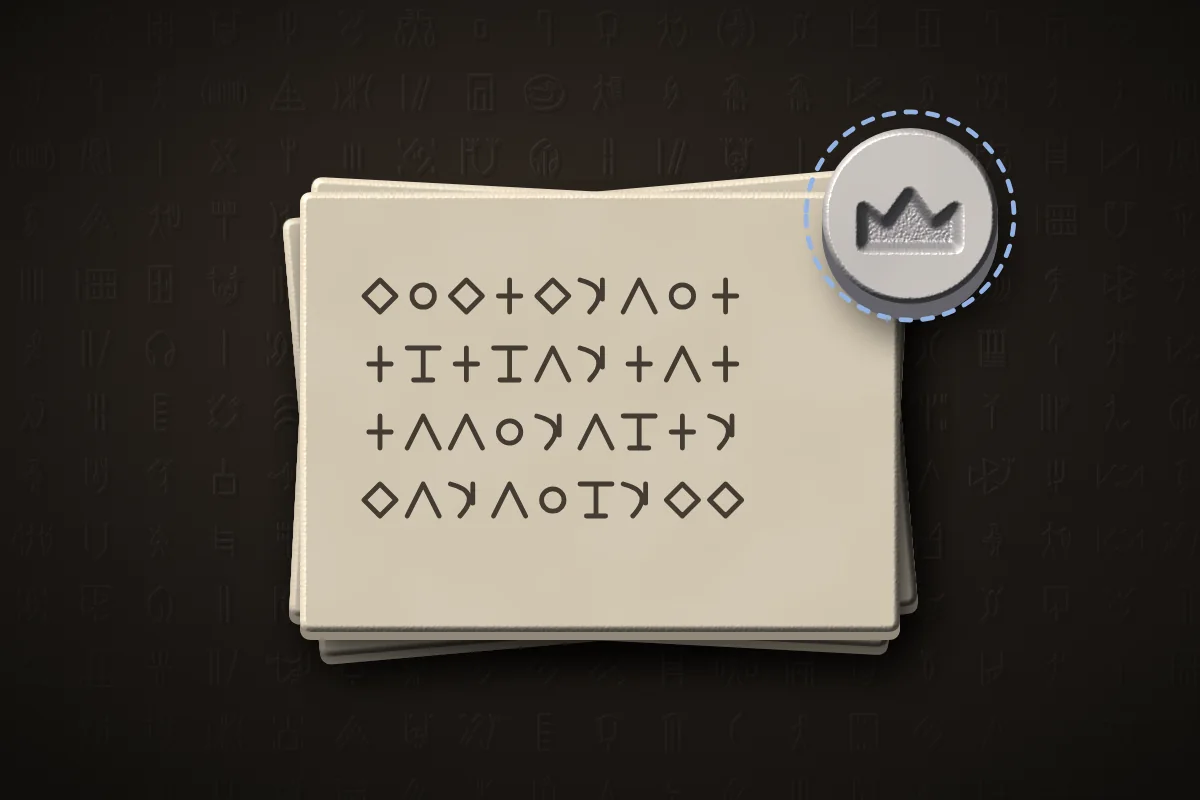
All the Susa texts of the script read in 2022, the most recent ancient script to be read.
In plain words
Linear Elamite, from what is now Iran, was read in 2022. The key was royal names already known from cuneiform, on objects dated well enough to predict which names should appear. This book publishes the full set of texts from Susa.
Technical detail
Complete edition of the Susa Linear Elamite texts. The decipherment (Desset et al. 2022, ZA 112:11-60) is anchored on royal names and titles known from cuneiform. Critics question parts of it: Dahl 2023 (archaising, not purely syllabic) and Mäder (about 70% phonetic).
How we read it
Read: not reachable (the De Gruyter ZA article gave an empty 202 response to curl and 405 to WebFetch, ResearchGate gave 403, and ANE Today was behind a bot block; only the open Hatamti database pages for two documents were read). Sources opened: doi.org/10.1515/za-2022-0003 (empty 202 / 405, not read), anetoday.org/desset-irans-linear-elamite-deciphered/ (bot block, not r, hatamti-elam.uliege.be/elamiteli/doc_detail/6, hatamti-elam.uliege.be/elamiteli/doc_detail/2, phys.org/news/2022-08-team-deciphered-ancient-iranian-linear.html (ope.
What they did
- Desset and colleagues proposed a phonetic reading of Linear Elamite, anchored on proper names shared with cuneiform Elamite texts (from the item summary; the paper itself was not read).
- The Hatamti database publishes each Linear Elamite document with a sign-by-sign transliteration and translation, citing the 2026 edition volume by Desset, Tabibzadeh, Basello and Marchesi.
- That volume, ‘Linear Elamite Inscriptions and Related Cuneiform Texts, Vol. 1: Linear Elamite Texts from Susa’, gives full editions of the Susa texts (Hatamti citation).
What they found
- Hatamti document 6 (Sb 155) has 50 signs and is read as naming Puzur-Sušinak, king of Awan, with the phrase ‘Insušinak loves him’; its edition is in section 3.4.1, pp. 85-91 of the 2026 volume (Hatamti doc 6).
- Hatamti document 2 (Sb 6) has 33 signs and runs left to right; its edition is in section 3.3.1, pp. 71-79 (Hatamti doc 2).
- No figures from the ZA paper are reported here because it was not read.
Strengths and limits
- Linear Elamite now has a public sign-by-sign corpus with readings, which makes it a rare known-answer test for statistical methods.
- The reading rests on a small corpus of a few dozen texts and on name anchors, and is not accepted by all specialists; this record cannot weigh that because the paper was not read.
- Our own crib test with Linear Elamite as a known answer was negative (experiments/crib_le_known_answer).
What the authors say comes next
- Further volumes of the Linear Elamite edition series are implied by the ‘Vol. 1’ title. (not stated (inferred from the Hatamti citation only))
Ideas it gives us
- Use the Hatamti Linear Elamite transliterations as a known-answer bench: run each of our structural methods (positional classes, sign clustering, restoration) blind on the Linear Elamite sign strings and score them against the published readings. A method that cannot recover known syllable classes or word breaks in a small, deciphered corpus should not be trusted on Indus. Open data enough: yes. Needs: Sign sequences and readings from the Hatamti database pages, collected with polite rate limits.
- Measure how short Linear Elamite texts must be cut before the methods fail, by truncating texts to Indus lengths. It gives a power curve for methods on texts of four to five signs. Open data enough: yes. Needs: Hatamti sign strings.
What we take from it
TestedWe used Linear Elamite as a known-answer test for our own name-matching method. The method could not recover its values, so we stopped it rather than run it on Indus.