Paper · 18 Jul 2026
A short book on proto-Elamite, the Indus script’s other unread neighbour
Kelley · Cambridge Elements
In a sentence
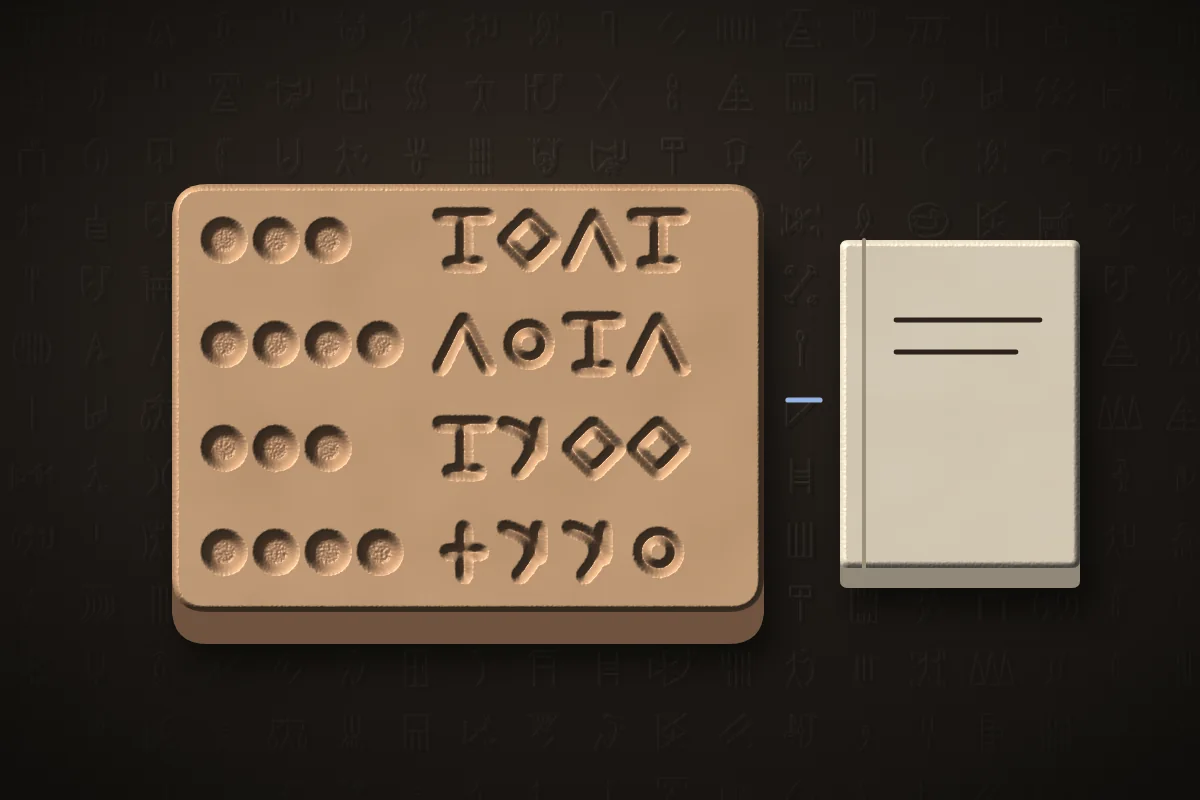
A new overview of proto-Elamite: about 1,700 tablets from Iran, c. 3300-2900 BCE, still only partly read.
In plain words
Proto-Elamite was written in Iran about 5,000 years ago, mostly to count goods, people and institutions. It is only partly understood. This short book sums up what is known. It describes a decipherment effort that mixes mathematics, comparison with other scripts and computer methods.
Technical detail
Cambridge Element; about 1,700 clay tablets, c. 3300-2900 BCE, hundreds of signs. The abstract describes the decipherment as combining mathematics, comparative studies, corpus digitisation and computer science (abstract only).
What we take from it
BackgroundProto-Elamite is the closest working model for an undeciphered administrative script. We use the computational methods of the same group in our Elamite bridge. The book is now the reference to check for sign-value anchors usable as a logo-syllabic test case.